Brief, one-sided electric-shock attacks triggered by chewing or light touch often point to trigeminal neuralgia, but persistent aching, numbness, or other neurological symptoms require a broader investigation. You will learn how doctors confirm the diagnosis, weigh medicines and age-related risks, compare procedures, and judge whether a surgeon is appropriate for your situation.
Key takeaways
- Brief electric-shock facial attacks with pain-free gaps fit classic trigeminal neuralgia.
- MRI helps identify blood-vessel contact, tumours, multiple sclerosis, or another cause.
- Medication response, frailty, heart health, and anaesthesia risk shape surgical decisions.
- Choose a neurosurgeon who explains procedure risks, alternatives, recovery, and follow-up clearly.
Does the facial pain match trigeminal neuralgia, or is it something else?
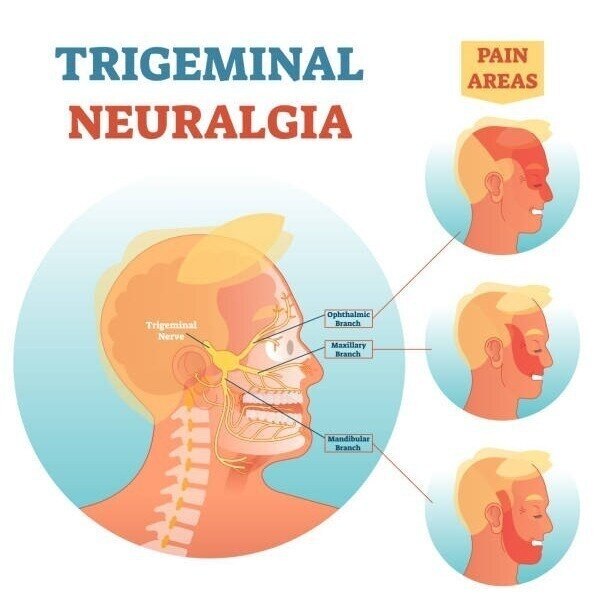
Severe, one-sided facial pain that feels like an electric shock or knife stab fits trigeminal neuralgia when each attack lasts a fraction of a second to about two minutes, stops completely, and returns in episodes. Brushing your teeth, speaking, chewing, touching the face, or cold air can trigger it.
Common trigger zones include the cheek, upper or lower lip, gums, and chin.
The painful nerve is usually the trigeminal nerve, cranial nerve V, which carries facial sensation and controls chewing. It is not the facial nerve, cranial nerve VII, which controls facial expression. “Facial pain brain surgery” and “brain surgery for facial nerve pain” are therefore imprecise descriptions of treatment for trigeminal neuralgia.
| Pattern | More consistent with | What it suggests |
|---|---|---|
| Brief, shock-like, one-sided attacks with pain-free intervals | Classical trigeminal neuralgia | Often involves irritation or compression of cranial nerve V |
| Continuous burning or aching, numbness, or weakness | Secondary facial pain or another nerve disorder | Requires examination and MRI rather than assuming classical trigeminal neuralgia |
| Tooth pain, jaw-joint pain, blisters, or neurological symptoms | Dental disease, temporomandibular-joint disorder, shingles, multiple sclerosis, stroke, or tumour | The cause needs targeted assessment |
- Seek urgent assessment for new numbness, facial weakness, hearing or vision changes, bilateral symptoms, fever, a rash, persistent pain, balance problems, or any other neurological deficit.
What tests and medicines come before a surgical decision?
Before a decision about trigeminal neuralgia surgery for older adults, clinicians confirm the diagnosis with a neurological examination and brain MRI. The examination checks facial sensation, the corneal reflex, jaw strength, hearing, balance, eye movements, other cranial nerves, limb strength, and coordination.
1. Request MRI sequences designed for the posterior fossa, including high-resolution three-dimensional T2-weighted images such as CISS or FIESTA. Focused views of the trigeminal nerve and cerebellopontine angle show the nerve’s course and nearby vessels; gadolinium contrast imaging is added when a tumour, inflammation, multiple sclerosis, or another abnormality needs clarification.
2. Do not treat a scan showing a blood vessel touching the nerve as proof of causation. The finding carries more weight when the vessel compresses or distorts the trigeminal nerve at its root entry zone and that side matches the patient’s attacks.
MRI also checks for multiple sclerosis, tumours, vascular malformations, and other secondary causes while showing whether microvascular decompression is technically plausible.
3. Carbamazepine and oxcarbazepine are first-line medicines. In an older adult, review sleepiness, dizziness, low sodium, falls, liver problems, kidney function, and interactions with anticoagulants and other medicines; blood tests and medication adjustments may be needed.
Pain relief after treatment does not mean these drugs can stop immediately. Reduce them only under clinical supervision, because abrupt withdrawal can trigger recurrent pain or other complications.
How does age change the decision to have surgery?
Age alone does not decide whether surgery is appropriate. Clinicians focus on medication-resistant pain, medication intolerance, recurrent pain, or a structural lesion that requires treatment.
An older-adult assessment includes:
- Frailty, cognition, and independence
- Heart and lung disease
- Anticoagulant use and safe interruption
- Kidney function and sodium level
- Anaesthesia risk
- Home support and expected recovery capacity
An operation becomes reasonable when disabling attacks continue despite an adequate medicine trial, adverse effects make carbamazepine or oxcarbazepine unacceptable, or imaging identifies a cause that needs treatment. Advanced age is not an automatic exclusion, but it changes the risk-benefit discussion.
Choosing a trigeminal neuralgia surgical treatment surgeon should involve a direct comparison of likely benefit and practical burden, especially for older adults with facial pain.
| Discussion point | What to weigh | Why it matters |
|---|---|---|
| Pain relief | Chance of immediate, delayed, or incomplete relief | Pain control must be recorded separately from sensory results |
| Facial sensation | Numbness, painful numbness, and corneal sensation | Reduced corneal protection can threaten the eye |
| Function | Chewing and independence during recovery | Temporary help at home may be necessary |
| Durability | Recurrence and repeat-treatment risk | A quick treatment may not provide permanent relief |
| Recovery | Hospital stay, anaesthesia, and rehabilitation demands | The procedure must match your recovery capacity |
The consultation should record pain-free status, facial numbness, corneal protection, chewing, and medicine use separately rather than calling treatment simply “successful.”
Which procedure fits the pain pattern and medical risk?
A fit older adult with clear root-entry-zone vessel compression and a priority to preserve facial sensation may suit microvascular decompression (MVD). Frailty, major heart or lung disease, anticoagulants, or limited recovery capacity may favour an incision-free or percutaneous option.
| Option | How it works | Main trade-off |
|---|---|---|
| Microvascular decompression | A posterior-fossa craniotomy under general anaesthesia separates the offending vessel from the trigeminal nerve with insulating material. | Preserves the nerve but carries greater burden, including hearing impairment, cerebrospinal-fluid leak, infection, facial weakness or numbness, stroke, and anaesthesia complications. |
| Stereotactic radiosurgery | Focused radiation, such as Gamma Knife, reaches the nerve without an incision or craniotomy. | Relief is often delayed; sensory change and recurrence remain possible. |
| Radiofrequency thermocoagulation | A needle through the cheek heats selected trigeminal fibres, allowing selective treatment of a clearly painful branch. | Usually acts quickly but intentionally injures fibres, causing numbness, corneal problems, painful numbness, or recurrence. |
| Balloon compression | A cheek needle places a balloon against the trigeminal ganglion, compressing fibres. | Rapid relief is possible, but numbness is broader. |
| Glycerol rhizolysis | Glycerol delivered through a cheek needle chemically lesions trigeminal fibres. | Quick treatment can produce numbness, corneal problems, painful numbness, or recurrent pain. |
“Facial pain brain surgery” and “brain surgery for facial nerve pain” are imprecise: trigeminal neuralgia involves cranial nerve V, not the facial nerve, cranial nerve VII. No procedure guarantees permanent relief. Trigeminal neuralgia surgery for older adults must balance pain control against sensation, eye protection, anaesthesia risk, and repeat treatment.
How should you choose a trigeminal neuralgia neurosurgeon and plan follow-up?
Choose a trigeminal neuralgia neurosurgeon who connects your attack pattern with MRI findings, rather than treating vessel contact alone as proof of disease. Ask these questions:
- Does the scan show compression or distortion at the trigeminal nerve’s root-entry zone, or only simple vessel contact?
- Which procedures do you offer, and why does one suit my pain pattern, MRI, age, frailty, and medication risks?
- How many posterior-fossa operations do you perform each year?
- How will anaesthesia, anticoagulant interruption, kidney function, sodium, and heart or lung disease be managed?
- What hospital stay, recovery time, transport, and home support will I need?
- If pain returns, what treatment will you offer, and when will medicines restart or change?
| Procedure | Main trade-off | Question to ask |
|---|---|---|
| Microvascular decompression | More invasive posterior-fossa surgery; aims to preserve sensation | Is root-entry-zone compression strong enough to justify it? |
| Stereotactic radiosurgery | No incision; relief can be delayed and pain can recur | How long will we wait before judging the result? |
| Percutaneous treatment | Rapid relief, but intentional nerve injury can cause numbness or corneal problems | Which technique limits sensory risk for me? |
Agree on separate follow-up measures: pain-free status, recurrence, facial numbness, corneal sensation, chewing, and medicine use. A specialist consultation with Dr Dilip Kiyawat in Pimpri-Chinchwad can review the MRI and medication risks before deciding whether surgery is appropriate, not promise an outcome.
Frequently asked questions
How can you tell whether facial pain matches trigeminal neuralgia?
Classic trigeminal neuralgia causes sudden, one-sided electric-shock or stabbing attacks lasting a fraction of a second to two minutes, with pain-free gaps. Speaking, chewing, brushing teeth, touching the face, or cold air can trigger attacks. Constant pain, numbness, weakness, fever, dental findings, or vision changes require assessment for other causes.
What tests and medicines come before trigeminal neuralgia surgery?
A clinician reviews the pain pattern, examines facial sensation and movement, and checks the teeth, jaw, ears, and neurological system. MRI with appropriate brain and cranial-nerve sequences can look for vascular contact, multiple sclerosis, a tumour, or another structural cause. Medicines such as carbamazepine or oxcarbazepine are commonly considered first, with blood tests and medication reviews when needed.
How does age affect trigeminal neuralgia surgery decisions?
Age alone does not decide treatment. The decision includes frailty, memory and mobility, kidney and liver function, heart and lung disease, blood-thinning medicines, anaesthesia risk, MRI findings, pain severity, and response or side effects from medication.
Which procedures can treat trigeminal neuralgia in an older adult?
Microvascular decompression addresses pressure from a blood vessel and requires an operation under general anaesthesia. Stereotactic radiosurgery uses focused radiation without an incision but relief can take time. Percutaneous procedures, including balloon compression, radiofrequency lesioning, and glycerol rhizolysis, reach the trigeminal nerve through the cheek and can suit selected patients. A trigeminal neuralgia neurosurgeon should match the option to the pain pattern, imaging, sensory risks, and overall medical condition.
How should you choose a trigeminal neuralgia neurosurgeon and plan follow-up?
Ask how often the surgeon treats trigeminal neuralgia, which procedures they offer, why one option fits you, and the risks of numbness, weakness, hearing problems, recurrence, anaesthesia, and blood loss. Before treatment, record medication doses, attack triggers, pain-free intervals, and side effects. Arrange follow-up to review pain relief, facial sensation, medicines, wound or radiation effects, and recurrence warning signs.