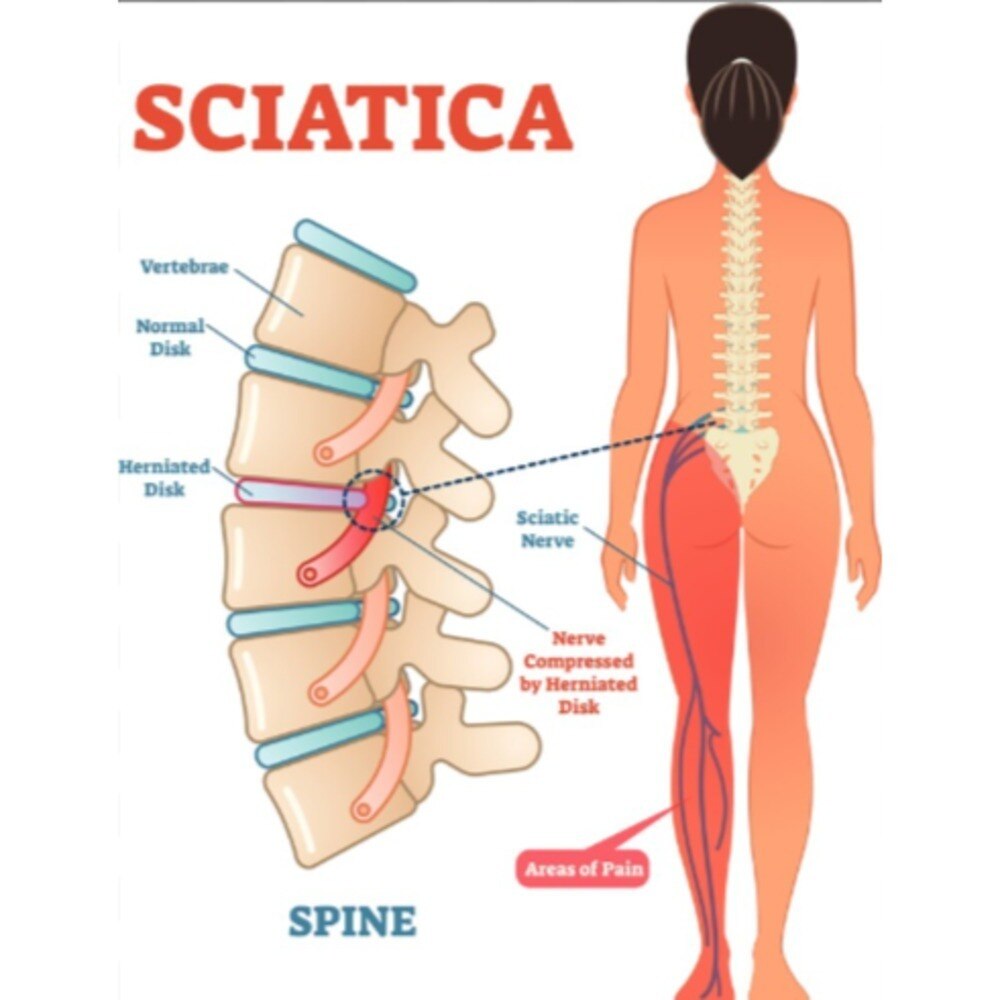
Pain travelling from your lower back or buttock into the leg can result from nerve-root compression, but the cause is not always a slipped disc. You will learn how to recognise urgent symptoms, understand the role of examination and MRI, compare non-surgical and surgical treatment, and choose appropriate specialist care.
Key takeaways
- Sciatica describes nerve-root symptoms; it does not prove a lumbar disc problem.
- Seek urgent care for new bladder or bowel loss, saddle numbness, or progressive leg weakness.
- MRI findings need to match your symptoms and neurological examination.
- Treatment usually progresses from activity and medicines to injections or surgery when indicated.
What Sciatica Is—and Which Conditions Can Cause It
Sciatica is a symptom pattern, not a diagnosis. Irritation or compression of a lumbosacral nerve root causes pain that travels from the lower back or buttock into a recognisable part of the leg, with tingling, numbness or weakness. Pain location alone cannot prove a disc problem.
Possible causes include:
- Herniated lumbar disc pressing on a nerve root
- Lumbar spinal stenosis, where narrowing crowds the nerves
- Degenerative changes affecting discs or facet joints
- Spondylolisthesis, where one vertebra slips forward
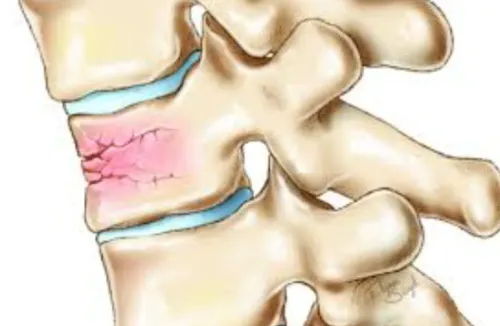
- Inflammatory disease, infection or vertebral fracture
- Rarely, cancer affecting bone or nerve structures
| Condition | Pattern that may suggest it | What distinguishes it |
|---|---|---|
| Nerve-root sciatica | Leg pain, tingling, numbness or weakness in a root distribution | Reflex, strength or sensation changes may match the affected root |
| Mechanical low-back pain | Back-centred aching linked to movement or posture | No consistent neurological deficit |
| Sacroiliac joint pain | Buttock pain near the pelvic joint | Usually lacks true dermatomal numbness or weakness |
| Hip arthritis | Groin pain, restricted hip movement, pain into the thigh | Hip examination reproduces symptoms |
| Peripheral nerve problem | Symptoms follow a named nerve rather than a spinal root | Distribution and examination findings differ |
Urgent assessment is needed for new bladder or bowel difficulty, numbness around the genitals or anus, rapidly worsening weakness or symptoms in both legs. A well experienced neurosurgeon should match the history and neurological examination with imaging before choosing lumbar disc and sciatica treatment.
Which Symptoms Need Emergency or Prompt Assessment?
New difficulty starting or controlling urination, loss of bowel control, numbness around the genitals or anus, rapidly worsening leg weakness, or symptoms in both legs require urgent assessment. These signs can indicate cauda equina syndrome or severe nerve compression.
| Urgency | Symptoms | What to do |
|---|---|---|
| Emergency | New bladder or bowel dysfunction; saddle numbness; rapidly worsening weakness; symptoms in both legs | Seek emergency assessment now |
| Prompt specialist review | Foot drop; progressive weakness; fever; recent serious infection; unexplained weight loss; cancer history; immunosuppression; major trauma; severe night pain | Arrange prompt neurosurgical or specialist assessment, not routine self-management |
A clinician will take a detailed symptom history, check how you walk, test muscle power, examine reflexes and sensation, and perform nerve-root tension manoeuvres. Do not rely on pain location or an MRI report alone.
A reduced ankle reflex can point to S1 nerve-root involvement, while a reduced knee reflex can suggest L4 involvement. Dermatomal numbness maps sensory loss to a particular root, and impaired toe lifting can indicate L5 weakness. These findings help determine whether you need urgent review or surgical referral.
When choosing a well experienced neurosurgeon for sciatica, ask whether the examination documents these findings and provides a clear plan for monitoring weakness or worsening symptoms.
When MRI Helps—and Why a Disc Finding Is Not a Diagnosis
Uncomplicated low-back pain, with or without sciatica, does not automatically need an immediate MRI. Imaging becomes more useful when symptoms persist despite appropriate care, neurological deficits appear, red flags raise concern, or an injection or operation is being considered.
An MRI report can identify:
- The affected spinal level, such as L4-L5 or L5-S1
- A disc protrusion or extrusion
- Narrowing around a nerve root
- Spinal canal stenosis
- Vertebral slippage, called spondylolisthesis
- Fracture, infection, tumour, or another structural cause
The important question is whether the scan explains your symptoms. Disc bulges and degenerative changes are common in people who have no pain. A finding supports a diagnosis only when its level and side match the painful leg distribution, examination findings, sensory changes, reflexes, and degree of weakness.
Ask, “What decision will this MRI change?” The answer might be continued non-operative care, closer monitoring, an injection discussion, or surgical assessment. An abnormal scan alone does not prove that surgery is needed.
If you are comparing lumbar disc treatment nearby, choose assessment that combines the MRI with a neurological examination rather than treating the report as the diagnosis.
How Treatment Progresses from Activity to Surgery
Treatment usually moves from active self-care to specialist intervention, not straight from MRI to surgery. Most acute sciatica improves without an operation.
1. Stay as active as your symptoms allow. Short walks and normal daily movement are preferable to prolonged bed rest, which can increase stiffness and delay recovery. Follow a structured physiotherapy or exercise plan adjusted to your pain, strength and function.
2. Use clinician-selected pain relief. NSAIDs require review of stomach-ulcer, kidney and cardiovascular risks; use the lowest effective dose for the shortest appropriate period. Do not self-start pregabalin, gabapentin, oral steroids or benzodiazepines as routine sciatica treatment.
3. Consider an epidural injection only for acute, severe sciatica after discussing its short-term benefit and procedural risks. The injection combines a local anaesthetic with a steroid, and must not delay urgent treatment for worsening weakness or cauda equina symptoms.
4. Consider discectomy or microdiscectomy when disabling leg pain continues despite reasonable non-operative care, and MRI findings match the affected nerve root and examination. A progressive weakness or emergency compression can justify earlier surgery; an MRI disc bulge alone is not enough.
5. Expect surgery to target nerve-root leg pain, not guarantee relief of back pain or permanent cure. Risks include recurrent herniation, infection, bleeding, dural tear, nerve injury, anaesthetic complications and persistent symptoms. A well experienced neurosurgeon should explain these limits when discussing lumbar disc and sciatica treatment.
How to Choose Specialist Sciatica Care in Pimpri-Chinchwad
Choose sciatica treatment in Pimpri-Chinchwad by the quality of the assessment, not by the MRI wording or the promise of quick surgery. A well experienced neurosurgeon for sciatica should test motor strength, sensation, reflexes, gait and nerve tension, then match those findings to your symptoms and scan.
Ask these questions before deciding on lumbar disc treatment nearby:
- Why is MRI needed now, or why is it safe to wait?
- What finding would make an operation appropriate: persistent disabling leg pain, progressive weakness, or emergency nerve compression?
- What non-operative options remain, and how long will you try them?
- Which warning signs require urgent contact or hospital assessment?
- When is the next review, and what will happen if weakness, pain or disability continues?
| Question | Clear answer | Warning sign |
|---|---|---|
| Examination | Strength, sensation, reflexes and gait are documented | The decision relies on the MRI report alone |
| Treatment | Physiotherapy, activity-based care and surgery are discussed when relevant | Every disc bulge is presented as an operation |
| Surgery | Expected leg-pain relief, limitations and risks are explained | Back-pain relief is guaranteed |
| Follow-up | A written review plan covers persistent symptoms and weakness | No timeframe or escalation plan is provided |
Ask how recurrence, persistent back pain or incomplete nerve recovery would be managed. Dr Dilip Kiyawat can be considered for specialist assessment in Pimpri-Chinchwad when decisions are based on examination, imaging correlation, and the severity and duration of functional problems. Clear reasoning matters more than treating every disc bulge as a surgical problem.
Related items
 | Spine Surgery Prolapsed Lumbar Intervertebral Disc- Medical management The prolapsed lumbar intervertebral disc also referred to as slipped disc, sciatica, or just... View product → |
 | Spine Surgery Dr. Dilip S. Kiyawat has wide experience in treating spinal disorders. View service → |
Frequently asked questions
What conditions can cause sciatica?
A herniated lumbar disc is a common cause, but spinal stenosis, bone spurs, spondylolisthesis, and other conditions can also irritate a lumbosacral nerve root.
Which sciatica symptoms need emergency assessment?
Seek emergency assessment for new bladder or bowel control problems, numbness around the groin or inner thighs, or rapidly worsening weakness in one or both legs.
When does an MRI help with sciatica?
MRI helps when symptoms persist, neurological deficits appear, serious disease is suspected, or surgery is being considered. A disc abnormality is not a diagnosis unless it matches your symptoms and examination.
How is lumbar disc and sciatica treatment chosen?
Treatment depends on pain severity, duration, neurological findings, and the cause. Options include staying active, targeted medicines, physiotherapy, injections, and surgery for selected cases.
How can you choose sciatica treatment in Pimpri-Chinchwad?
Choose a specialist who performs a neurological examination, explains whether imaging matches your symptoms, discusses non-surgical options, and states when surgery is warranted.
Related product
Brain Surgeon Here are numerous types of brain surgery. The type used is based on the area of the brain and the condition being treated. View product → |