
After a crash or fall, a disc abnormality is only one possible explanation for back or leg symptoms. You will be able to identify emergency warning signs, understand which tests and findings matter, compare surgeons on clinical evidence, and recognise when surgery, rehabilitation, or a second opinion is the safer decision.
Key takeaways
- Seek emergency care for new bladder, bowel, saddle-numbness, or worsening weakness.
- Confirm whether the disc, fracture, nerve, or another injury causes your pain.
- Compare surgeons by diagnosis, proposed operation, risks, alternatives, and follow-up.
- Request MRI images, reports, examination findings, and a written second-opinion plan.
When a traumatic disc injury becomes an emergency
Go to an emergency department for immediate assessment after trauma if neurological function is changing. Do not wait to choose a surgeon when you have new bladder or bowel problems, numbness around the genitals or anus, rapidly worsening leg weakness, paralysis, or loss of coordination. Severe pain alone does not establish an emergency.
- New difficulty starting urination or inability to empty the bladder
- Loss of bladder or bowel control
- Saddle-area numbness
- Weakness spreading or worsening in one or both legs
- Bilateral leg symptoms, paralysis, or new difficulty walking
These findings raise concern for cauda equina compression, nerve injury, fracture, dislocation, ligament disruption, or an epidural haematoma. A normal or near-normal bladder scan does not rule out cauda equina syndrome; the history, strength testing, sensation, reflexes, and walking assessment still matter.
Trauma related disc surgery is not one standard operation. Before considering lumbar disc surgery after injury, hospital clinicians must determine whether the spine is stable and whether the symptoms match nerve compression.
Plain lumbar X-rays can screen for obvious fracture, CT defines bony injury, and MRI assesses disc material, nerve roots, ligaments, epidural blood, and cauda equina compression. Do not treat an MRI disc bulge as the emergency unless it matches the examination and symptoms.
How doctors identify the true source of pain after trauma
The accident pattern sets the starting probability. A high-energy crash, fall from height or direct blow raises concern for vertebral fracture or instability; twisting with sudden leg pain points more toward acute disc herniation. A low-speed impact does not exclude serious injury, especially with osteoporosis or a neurological deficit.
Examination then tests whether the scan matches your symptoms:
- Disc-related nerve compression causes radiating leg pain, altered sensation, reduced reflexes or weakness in a specific nerve-root pattern.
- A vertebral fracture causes focal midline tenderness and pain with movement; CT confirms the bony injury.
- Facet injury causes local pain beside the spine, worsened by extension or rotation, without a consistent nerve deficit.
- Sacroiliac injury causes pain near one buttock, reproduced by targeted pelvic stress tests rather than a single nerve-root pattern.
- Ligament disruption suggests instability, severe movement-related pain or abnormal alignment on imaging.
- Cauda equina compression produces saddle numbness, urinary or bowel dysfunction, or weakness affecting both legs.
- A hip, pelvic, abdominal or muscle injury can mimic back pain when the neurological examination and spinal images do not explain the symptoms.
CT is the key initial study when significant bony trauma is suspected. MRI shows disc material, nerve-root or cauda equina compression, epidural blood and ligament damage.
Doctors must match those findings to the examination before recommending lumbar disc surgery after injury; an abnormal disc without matching nerve compression is not proof that the disc causes the pain.
When lumbar disc surgery helps—and when it is the wrong operation
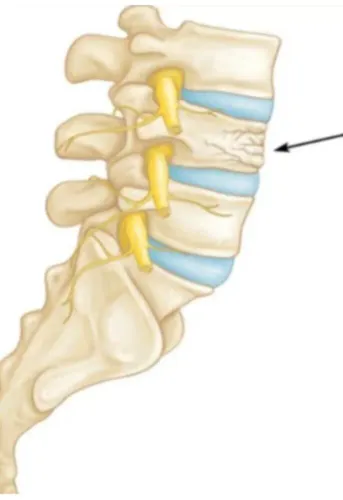
An MRI abnormality alone does not justify lumbar disc surgery after injury. The herniated level and side must match dermatomal leg pain, examination findings such as weakness or reduced reflexes, and, when uncertainty remains, electrodiagnostic testing. Otherwise, surgery may target an incidental bulge rather than the pain source.
| Option | Findings | Usual direction |
|---|---|---|
| Urgent decompression | New bladder or bowel loss, saddle numbness, rapidly worsening weakness, paralysis, or nerve compression with an unstable fracture, dislocation, ligament disruption, or epidural haematoma | Immediate hospital assessment and possible emergency surgery |
| Elective decompression | Persistent disabling leg pain or neurological loss despite structured non-surgical care, with matching MRI and examination findings | Planned microdiscectomy or another nerve-decompression procedure |
| Structured non-surgical care | Stable neurological findings, improving symptoms, isolated back pain, or MRI findings that do not match the examination | Activity as tolerated, appropriate analgesia, education, and supervised rehabilitation |
Trauma-related disc surgery is not one standard operation. A stable spine with a focal disc herniation differs from a disc injury combined with fracture-related instability; fusion belongs to selected instability, deformity, fracture, or recurrent-disease cases, not to an uncomplicated herniation.
Seek a second opinion before surgery recommended mainly for back pain, a proposed fusion, improving symptoms, or an “urgent” operation without objective weakness or cauda equina features. Have the reviewer examine the actual MRI or CT images, not only the radiology report.
How to compare a spine surgeon in Pimpri-Chinchwad
A useful shortlist for the best neurosurgeon in pimpri chinchwad starts with verifiable training, not online rankings. Check the surgeon’s current registration in the National Medical Commission National Medical Register or Maharashtra Medical Council, specialist qualification such as MCh or DNB, and experience with lumbar decompression and traumatic spinal injuries.
| Comparison point | What to verify | Why it matters |
|---|---|---|
| Qualifications | Current registration, neurosurgery or orthopaedic spine training, and hospital privileges | Unverified credentials weaken accountability |
| Trauma capability | Emergency MRI, CT, anaesthesia, intensive care, blood services and rehabilitation at the facility | Fracture, instability or neurological deterioration needs more than a routine operation |
| Relevant experience | Lumbar discectomy cases involving nerve compression, fractures, ligament injury or epidural haematoma | “Trauma spine” is not one standard procedure |
| Outcome reporting | Anonymised rates of infection, dural tear, neurological worsening, readmission and reoperation | A complication-aware surgeon gives a more useful comparison than a success slogan |
Ask whether your MRI finding matches the painful leg distribution, examination and, when needed, electrodiagnostic testing. Also ask what happens if you choose structured non-surgical care, what symptom surgery is expected to improve, and how urgently weakness changes the plan.
For a consultation with Dr Dilip Kiyawat, or any shortlisted surgeon, take the accident details, imaging reports and medication list, then ask:
- What injury are you treating: disc compression, fracture, instability or another pain source?
- What is the exact operation, and what happens if I wait?
- What is your emergency transfer plan if this facility cannot manage deterioration?
- Which outcomes do you track after surgery, and over what follow-up period?
A surgeon who cannot answer these questions clearly is not the best neurosurgeon choosing lumbar disc surgery for after trauma.
Related items
 | Spine Surgery Prolapsed Lumbar Intervertebral Disc- Medical management The prolapsed lumbar intervertebral disc also referred to as slipped disc, sciatica, or just... View product → |
 | Spine Surgery Dr. Dilip S. Kiyawat has wide experience in treating spinal disorders. View service → |
What your treatment plan and second opinion should contain
A safe decision document names the diagnosis and the decision at each stage: spinal level, side, neurological finding, matching MRI or CT evidence, and why disc compression—not fracture, instability, facet or sacroiliac injury—is causing symptoms. It must distinguish expected relief of leg pain from less predictable relief of isolated back pain.
1. Before surgery, record the accident mechanism, examination, imaging review, stability assessment, proposed procedure, non-surgical alternative and reason to operate now. Ask what happens if you wait. Include risks: recurrent herniation, dural tear or cerebrospinal-fluid leak, infection, nerve injury, blood clot, persistent symptoms and reoperation.
2. During non-surgical care, specify medicines, activity limits, physiotherapy or graded exercise, work guidance, warning symptoms and a review date. Define failure as worsening objective weakness, cauda equina symptoms or persistent nerve pain despite an agreed trial—not an abnormal MRI alone.
3. At follow-up, document pain and walking changes, strength, sensation, reflexes, wound status, medication reduction, return-to-work goals and the plan if symptoms persist or recur.
A second opinion is particularly important when fusion is proposed for one disc herniation, surgery targets mainly back pain, symptoms are improving, examination and imaging disagree, or urgency is claimed without objective weakness or cauda equina features. Give the second surgeon the actual MRI or CT images and examination findings, not only the radiology report.
Choosing the best neurosurgeon for lumbar disc surgery after trauma means comparing documented trauma assessment, decompression experience, complications, reoperations and non-operative advice—not rankings. Trauma-related disc surgery is not one standard operation.
Frequently asked questions
When does a traumatic lumbar disc injury become an emergency?
Seek immediate emergency assessment for new bladder or bowel problems, numbness around the genitals or anus, rapidly worsening leg weakness, paralysis, or loss of coordination. Severe pain alone does not establish an emergency.
How do doctors identify the true source of pain after trauma?
Doctors compare your injury history and pain pattern with a neurological examination and imaging such as MRI or CT. They check whether a disc, nerve compression, fracture, muscle injury, or another condition matches your symptoms.
When does lumbar disc surgery help after an injury?
Surgery helps when imaging and examination show a treatable disc problem that matches persistent nerve symptoms, progressive weakness, or emergency compression. It is the wrong operation when the disc abnormality does not explain your pain.
How should you compare a spine surgeon in Pimpri-Chinchwad?
Ask about experience with trauma-related disc surgery, the exact operation proposed, non-surgical alternatives, complication risks, expected recovery, hospital support, and follow-up arrangements.
What should a treatment plan and second opinion contain?
Request the diagnosis, examination findings, MRI or CT interpretation, proposed procedure, reason for surgery, alternatives, risks, recovery timeline, warning signs, and follow-up schedule in writing.