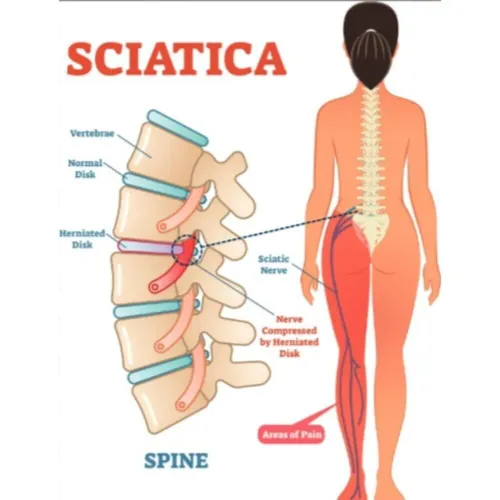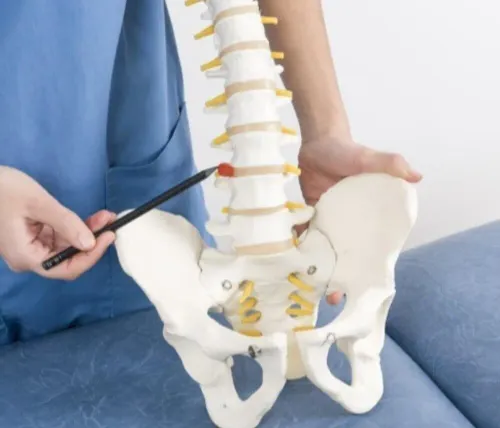


An MRI showing a slipped or herniated lumbar disc does not automatically mean you need surgery. You will be able to identify the symptoms, examination findings, treatment history, and consultation questions that support surgery, recognise emergency warning signs, and compare Pune neurosurgeons using evidence rather than online claims.
Key takeaways
- Persistent leg pain matching a compressed nerve matters more than an MRI bulge alone.
- Compare symptoms, neurological examination and MRI findings before accepting surgery.
- Try appropriately supervised non-surgical treatment unless weakness or emergency symptoms require prompt care.
- Ask about the proposed operation, alternatives, risks, recovery and the surgeon’s experience.
When do symptoms make you a lumbar disc surgery candidate?
An MRI disc bulge alone does not make you a lumbar disc surgery candidate in Pune. Doctors look for persistent, function-limiting sciatic leg pain or neurological symptoms that match compression of a specific nerve root, plus symptoms that continue after appropriate non-surgical care.
During examination, the clinician checks:
- Leg strength for weakness
- Skin sensation for numbness or sensory loss
- Knee and ankle reflexes for reduction
- Walking, balance, and gait changes
- Straight-leg-raise response and the pattern of pain
A surgical discussion becomes more relevant when these findings correspond to the MRI level and side. Isolated lower-back pain is a different problem; disc surgery improves it less predictably than nerve-related leg pain.
| Symptoms | Clinical meaning | Action |
|---|---|---|
| Persistent one-sided sciatic pain | Pain follows a compressed nerve-root pattern and limits walking, sleep, or work | Assess MRI correlation and prior treatment |
| Weakness, sensory loss, or reduced reflex | Objective nerve dysfunction | Arrange prompt specialist assessment |
| New urinary retention or incontinence, bowel-control loss, saddle numbness, rapidly worsening leg weakness, or symptoms in both legs | Possible cauda equina syndrome | Seek emergency assessment, not a routine appointment |
Searching for the best neurosurgeon lumbar disc surgery for eligibility in Pune should mean checking this clinical match, not relying on online popularity. A specialist should explain what non-surgical treatment remains and why surgery is safer or more useful now.
How does a neurosurgeon prove that the MRI finding is causing your symptoms?
A disc bulge on an MRI does not prove that it is causing your pain or that you need surgery.
Disc changes are common in people without symptoms, so the consultant must review the actual MRI images alongside the radiology report and confirm that the disc level and side match the nerve-root distribution of your symptoms.
The examination should document:
- Motor power, such as weakness when lifting the foot, extending the big toe, or standing on your toes
- Sensation in the affected leg and foot
- Reflexes at the knee and ankle
- Walking ability, including foot drop, limping, or an unsteady gait
- Straight-leg-raise findings, including the angle at which leg pain begins
- Saddle sensation and bladder or bowel control
A matching pattern of radiating leg pain, sensory change, weakness, or reflex loss gives the MRI greater clinical significance. Progressive motor weakness deserves expedited review even when pain is not severe. New urinary retention, incontinence, bowel-control loss, saddle numbness, or symptoms in both legs requires urgent assessment.
If surgery is recommended mainly because of the scan, while your neurological examination is normal or the diagnosis remains uncertain, seek a second opinion. Take the MRI images, report, symptom timeline, examination findings, and treatment history to your lumbar disc surgery consultation in Pune.
Questions such as “Which nerve is compressed?” help you assess the best neurosurgeon for slipped disc in Pune more reliably than online popularity.
How long should you try non-surgical treatment before deciding on surgery?
For pain without progressive neurological loss, give non-surgical care an appropriate trial before deciding on lumbar disc surgery. Remain active within your limits, avoid prolonged bed rest, use suitable pain medicines, and complete physiotherapy or exercise-based rehabilitation.
A few days of medication failure is not enough; persistent, disabling leg pain after several weeks of well-managed treatment can justify surgical review.
- Continue ordinary movement as tolerated, reducing activities that sharply worsen leg pain.
- Follow the prescribed analgesic plan rather than stopping after one or two doses.
- Complete the recommended physiotherapy or exercise programme.
- Discuss an epidural steroid injection or selective nerve-root injection when pain remains limiting and the examination and MRI identify a suitable compressed nerve.
| Symptom pattern | Usual decision pathway | When timing changes |
|---|---|---|
| Persistent sciatica matching a compressed nerve | Surgery becomes more reasonable after an appropriate non-surgical trial because nerve-root pain responds more predictably to decompression. | Significant or worsening weakness requires expedited review. |
| Isolated lower-back pain | Disc surgery is less reliable because removing a disc may not resolve mechanical back pain. | Do not use pain alone to assume surgery will help. |
| New bladder or bowel dysfunction, saddle numbness, rapidly worsening weakness, or symptoms in both legs | Seek emergency assessment immediately; do not wait to complete physiotherapy or injections. | These symptoms can indicate severe nerve compression. |
If you are considering a lumbar disc surgery consultation in Pune, ask whether your symptoms, examination, and MRI support being a lumbar disc surgery candidate in Pune.
Which operation might be appropriate, and what should the consultation cover?
Lumbar microdiscectomy or discectomy usually removes the disc material pressing on a nerve; it does not automatically require spinal fusion. The choice depends on disc location, the compressed nerve, spinal stability, recurrent herniation, and whether leg pain, weakness, numbness, or back pain is expected to improve.
| Option | Main purpose | When it fits |
|---|---|---|
| Microdiscectomy or discectomy | Remove the herniated fragment and decompress the nerve | Persistent, disabling radicular symptoms matching the MRI and examination |
| Continued non-operative care | Allow symptoms to settle with medicines, activity, and rehabilitation | Symptoms are improving or surgery offers little added benefit |
| Fusion | Stabilise a painful or unstable spinal segment | A separate indication such as instability or a selected structural problem |
Ask what benefit is realistic: leg pain often improves more predictably than isolated lower-back pain, and numbness or weakness can take longer or remain. Discuss recurrent herniation, dural tear or cerebrospinal-fluid leak, infection, nerve injury, blood clots, anaesthetic complications, and the possibility of further surgery.
For a lumbar disc surgery consultation in Pune, ask:
- Why this operation, and why not continued care or decompression alone?
- Which nerve is compressed, and do my symptoms and examination match it?
- What is the plan if back pain is my main symptom?
- What restrictions, rehabilitation, and urgent postoperative contact will apply?
A search for best neurosurgeon lumbar disc surgery for eligibility in Pune should favour clear answers over promises of a guaranteed cure or guaranteed return to work.
How can you compare a Pune neurosurgeon before booking surgery?
“Best” is not a medical category. For a search such as best neurosurgeon for slipped disc in pune or best neurosurgeon lumbar disc surgery for eligibility in pune, compare evidence: Maharashtra Medical Council or National Medical Commission registration, regular spinal-disorder treatment, and an explanation matching your symptoms and examination to the actual MRI images.
| Criterion | Check | Warning sign |
|---|---|---|
| Registration | Verify the doctor’s registration number | No registration details |
| Surgical reasoning | Ask which nerve is compressed and why | MRI alone drives the decision |
| Alternatives | Request medication, physiotherapy, injection, or observation options | Surgery is presented as the only choice |
| Expectations | Ask which symptom should improve and what may remain | Guaranteed cure or return to work |
Carry the MRI images and report, symptom timeline, medication list, physiotherapy records, injection details, and previous medical reports. Seek a second opinion when surgery rests mainly on the scan, fusion is proposed for isolated leg pain, your neurological examination is normal, or the diagnosis is uncertain.
Ask who will operate, which hospital will be used, whether anaesthesia and medical-risk assessment are needed, your lifting and driving restrictions, rehabilitation plan, and whom to contact urgently after surgery for fever, wound drainage, new weakness, or bladder symptoms.
A consultation with Dr Dilip Kiyawat should be judged by these answers, not by the label “best.”
Related items
 | Spine Surgery Dr. Dilip S. Kiyawat has wide experience in treating spinal disorders. View service → |
 | Spine Surgery Prolapsed Lumbar Intervertebral Disc- Medical management The prolapsed lumbar intervertebral disc also referred to as slipped disc, sciatica, or just... View product → |
Frequently asked questions
When do symptoms make you a lumbar disc surgery candidate?
Surgery becomes more relevant when persistent, function-limiting sciatic leg pain or neurological symptoms match compression of a specific nerve root and continue after appropriate non-surgical care. Progressive weakness or emergency symptoms require prompt medical assessment.
How does a neurosurgeon prove that the MRI finding is causing symptoms?
The neurosurgeon compares your pain pattern, sensory changes, reflexes and muscle strength with the nerve root compressed on MRI. An MRI disc bulge alone does not establish the cause.
How long should you try non-surgical treatment before deciding on surgery?
The timeframe depends on symptom severity, neurological findings and response to treatment. Ask the neurosurgeon to define the treatment plan, review point and signs that require earlier surgery.
Which operation might be appropriate for a lumbar disc problem?
A surgeon may discuss lumbar discectomy or microdiscectomy when a disc fragment compresses a nerve and symptoms fit. The consultation should cover alternatives, risks, expected recovery and why that operation suits your findings.
How can you compare a Pune neurosurgeon before booking surgery?
Compare the surgeon’s explanation of your diagnosis, examination of your neurological function, proposed alternatives, complication discussion, follow-up plan and willingness to answer questions before booking.