
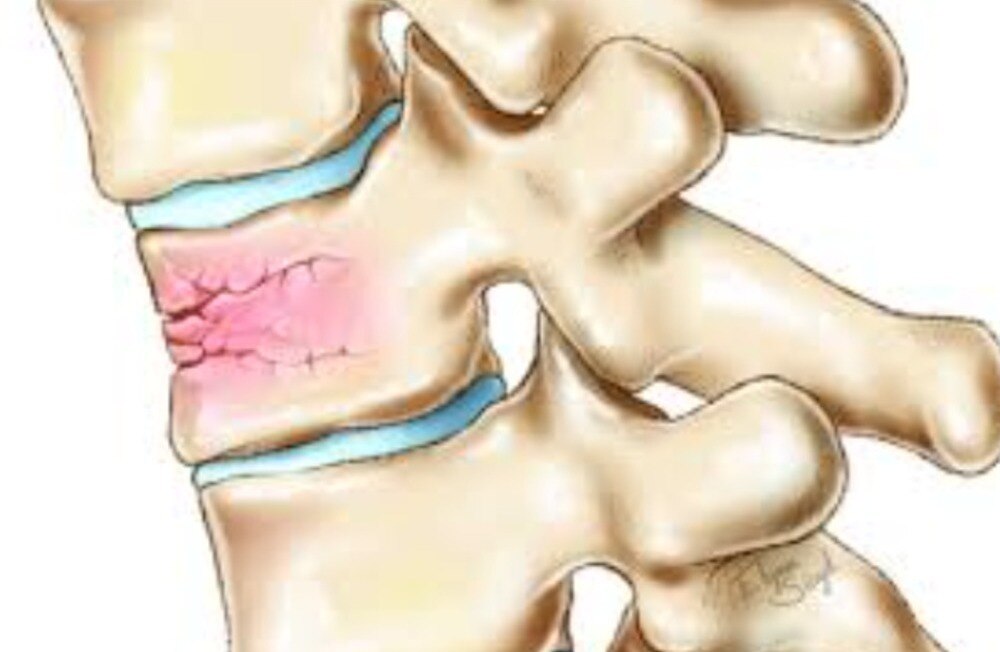
A spine fracture does not always lead straight to an operation. The correct pathway begins with emergency stabilisation and a neurological examination, then uses imaging and fracture-pattern analysis to decide between protection, monitoring, decompression, fixation, fusion or rehabilitation.
Key takeaways
- Call emergency services for weakness, numbness, paralysis, deformity, or bladder and bowel changes.
- Doctors assess stability using neurological findings and CT or MRI imaging.
- Surgery usually involves anaesthesia, positioning, decompression when needed, fixation, and closure.
- Compare trauma experience, imaging review, surgical plan, risks, and rehabilitation support before treatment.
What happens first after a suspected spinal fracture?
The first step is emergency assessment and stabilisation, not immediate fracture correction. Call emergency services after major trauma with new weakness, numbness, loss of bladder or bowel control, difficulty breathing, severe midline back or neck pain, visible deformity, or worsening symptoms.
- Clinicians assess airway, breathing and circulation, protect the neck and spine, and limit twisting or bending during transfer. They use a cervical collar or other spinal precautions when the injury pattern or symptoms warrant it.
- They document strength, sensation, reflexes, limb movement, saddle sensation and bladder function. Repeating this examination shows whether cord or nerve-root damage is progressing.
- Imaging follows the examination and initial stabilisation. A normal X-ray does not reliably exclude a cervical fracture, so significant trauma commonly proceeds to CT.
| Scan | Main purpose | Usual role after trauma |
|---|---|---|
| X-ray | Shows alignment and some fractures | Initial assessment when the injury is low risk or imaging access is limited |
| CT | Defines bone breaks, displacement and canal narrowing | Preferred detailed test for significant trauma |
| MRI | Shows spinal cord, discs, ligaments, nerve roots and epidural haematoma | Added after CT for neurological signs, suspected soft-tissue injury or unexplained severe symptoms |
Progressive neurological loss, cord compression, an unstable fracture or dislocation, and an open injury require urgent specialist decisions. Stable fractures without neurological loss may not need surgery. If you are researching spine injury surgery in Pune, confirm that the treating team has 24-hour CT, MRI, operating-room and intensive-care access.
How do doctors decide whether a fracture is stable enough for non-operative care?
A fracture is stable only when the spine can maintain its alignment under normal loading and the neurological examination is intact. Pain severity alone does not decide this; doctors assess the fracture pattern on CT and use MRI when ligament, disc, nerve-root or spinal-cord injury is suspected.
Findings that raise concern for instability include:
- Vertebral displacement, translation or abnormal angulation
- Significant vertebral-body collapse or loss of height
- Disruption of the posterior ligamentous complex
- Kyphotic deformity or progressive spinal misalignment
- Spinal-cord, nerve-root or cauda-equina compression
The AOSpine Thoracolumbar Injury Classification combines fracture morphology, neurological status and posterior ligamentous-complex injury to support the decision. It guides judgement rather than replacing it.
| Approach | Typical plan | When it applies |
|---|---|---|
| Non-operative care | Analgesia, selected bracing, restricted lifting and walking as advised, with repeat X-rays or CT | Stable alignment, no progressive deformity, intact neurology and no significant compression |
| Urgent surgery | Decompression, reduction and fixation, with or without fusion | Cord compression, worsening weakness or numbness, dislocation, open injury or clear instability |
| Planned surgery | Stabilisation or reconstruction after medical optimisation | Persistent deformity, painful collapse, failed bracing or an unstable pattern without immediate neurological decline |
Follow-up matters because a fracture can displace after the first scan. Ask a fracture correction specialist in Pune how alignment, pain, walking ability and neurological findings will be checked between visits.
What are the surgical stages from anaesthesia to fixation?
Planning starts with CT and MRI review, neurological findings, fracture alignment, ligament damage and medical optimisation. The team confirms the levels to treat, blood-thinner use, bone quality and the intended approach before consent. The order can change with spinal-cord injury, polytrauma or medical instability.
Under general anaesthesia, the patient is positioned to protect the spinal cord and pressure points. Neuromonitoring is added when the injury or operation threatens cord or nerve function. Surgeons then reduce the fracture, decompress the cord or nerve roots by removing bone, disc or haematoma when necessary, and verify alignment.
| Surgical option | What it does | When it applies |
|---|---|---|
| Decompression alone | Relieves cord or nerve pressure without permanent implants | Stability remains adequate after pressure is removed |
| Posterior fixation | Uses screws and rods, sometimes with bone graft | Unstable posterior or thoracolumbar injuries needing alignment and support |
| Anterior reconstruction | Removes damaged disc or vertebral body and uses a cage, plate and graft | Anterior column collapse or compression requires reconstruction |
| Combined surgery | Uses anterior and posterior decompression or fixation | One approach cannot provide adequate decompression and durable stability |
| Vertebroplasty or kyphoplasty | Injects cement, with kyphoplasty first creating a cavity and correcting selected collapse | Painful compression fractures without major cord compression |
Fusion places bone graft across the unstable segment; it sacrifices motion to create lasting stability. The surgeon closes muscle, fascia and skin after haemostasis and may place a drain. In recovery, staff repeatedly check strength, sensation, movement, pain and bladder function, then obtain postoperative imaging when indicated.
A best spine trauma and fracture correction specialist should explain each choice and its trade-offs.
How do level, fracture cause and recovery needs change the operation?
The level and cause of a fracture determine the safest route, fixation length and pace of recovery.
| Level | Surgical implications | Recovery focus |
|---|---|---|
| Cervical | Anterior, posterior or combined surgery may restore alignment, decompress the cord and protect breathing-related function. | Frequent neurological checks, swallowing assessment, neck protection and early respiratory care. |
| Thoracic | Long-segment fixation may be needed for unstable injuries because the rib cage and spinal cord leave little margin for deformity. | Trunk control, breathing exercises, pressure care and strength training. |
| Lumbar | Decompression and fixation depend on canal narrowing, vertebral collapse, nerve-root symptoms and load-bearing stability. | Gradual mobilisation, walking practice, lifting restrictions and core rehabilitation. |
A traumatic fracture follows force such as a fall or collision. An osteoporotic fracture can collapse after minor force, so weak vertebrae may require cement augmentation, longer fixation or stronger screw strategies. A tumour-related pathological fracture also requires tumour assessment and treatment planning; decompression, reconstruction or stabilisation may be combined with oncology care.
After surgery, neurological examinations are repeated and X-rays or CT confirm alignment and implant position; MRI is used when cord, disc or persistent compression needs review. Mobilisation begins when fixation and medical stability permit, followed by physiotherapy, occupational therapy, bladder and bowel planning, respiratory management and pressure-injury prevention.
- Discuss risks including neurological worsening, infection, cerebrospinal-fluid leak, blood loss, clots, implant malposition, loosening, non-union, recurrent deformity and further surgery.
- Ask how osteoporosis, smoking, diabetes and anticoagulants change fixation or timing.
- For spine injury surgery in Pune, compare emergency imaging, ICU access, documented neurological monitoring and the available rehabilitation pathway—not location alone.
How can you assess a spine trauma specialist before treatment?
A “best spine trauma and fracture correction specialist” is not a formal medical designation. Choose a spine trauma specialist in Pune or fracture correction specialist in Pune by checking recognised neurosurgery or orthopaedic-spine training, current registration, personal experience with acute spinal-cord injury, and access to emergency decompression, fixation and intensive care.
Dr Dilip Kiyawat can be considered alongside other clinicians using these checks rather than advertising language.
Bring these records to the consultation:
- CT or MRI images, preferably on the original disc or online link
- Written imaging reports
- Every medication and dose
- Anticoagulant or antiplatelet names, such as warfarin, apixaban, aspirin or clopidogrel
- Osteoporosis history, previous fractures and bone-density results
- How the injury happened, including a fall height or road-traffic impact
- The exact time numbness, weakness, bladder changes or worsening pain began
| Area to check | Reliable answer | Warning sign |
|---|---|---|
| Training and registration | Named qualification, issuing institution and current registration number | Vague claims about being “best” |
| Emergency access | A named hospital with 24-hour CT, MRI, operating room and ICU access | Clinic-only arrangements |
| Spinal-cord care | Documented neurological examinations and acute cord-injury experience | No clear emergency pathway |
| Treatment choices | Explains analgesia, mobilisation, bracing and follow-up imaging when appropriate | Surgery presented as the only option |
| Recovery planning | Identifies physiotherapy, occupational therapy and rehabilitation follow-up | No plan beyond wound review |
Related items
 | Spine Surgery Dr. Dilip S. Kiyawat has wide experience in treating spinal disorders. View service → |
Brain Surgeon Here are numerous types of brain surgery. The type used is based on the area of the brain and the condition being treated. View product → |
Frequently asked questions
What happens first after a suspected spinal fracture?
Emergency teams stabilise the neck and spine, assess breathing and neurological function, control pain, and arrange CT or MRI imaging. Do not move the injured person unless danger makes movement necessary.
How do doctors decide whether a fracture is stable enough for non-operative care?
They assess spinal alignment, ligament damage, fracture pattern, neurological findings, pain, and CT or MRI results. A stable fracture without progressive deformity or nerve compression may be treated with a brace, observation, medication, and follow-up imaging.
What are the surgical stages from anaesthesia to fixation?
The usual sequence includes preoperative planning, general anaesthesia, careful positioning, surgical exposure, decompression when nerves or the spinal cord are compressed, fixation with screws and rods, imaging checks, closure, and postoperative monitoring.
How do level, fracture cause and recovery needs change the operation?
Neck, thoracic, lumbar, and sacral fractures require different positioning and fixation strategies. High-energy trauma, osteoporosis, tumours, infection, neurological injury, and expected activity levels also influence the approach and rehabilitation plan.
How can you assess a spine trauma specialist before treatment?
Ask about trauma experience, the exact fracture classification, imaging findings, non-operative alternatives, proposed levels of fixation, neurological risks, complications, hospital support, and the rehabilitation timeline.