A weakened vertebra can collapse after a fall, lifting, coughing, or no obvious injury, but an X-ray finding alone does not determine whether you need surgery. You will learn how doctors confirm the fracture, recognise emergencies, compare bracing and procedures, and assess an osteoporotic spine fracture surgeon safely.
Key takeaways
- Seek urgent care for weakness, numbness, bladder changes, or loss of bowel control.
- MRI helps distinguish a new painful fracture from an old vertebral collapse.
- Bracing and early movement suit stable fractures without nerve compression.
- Kyphoplasty or stabilisation depends on pain, collapse, deformity, and spinal pressure.
How an Osteoporotic Vertebral Fracture Is Confirmed—and When It Is Urgent
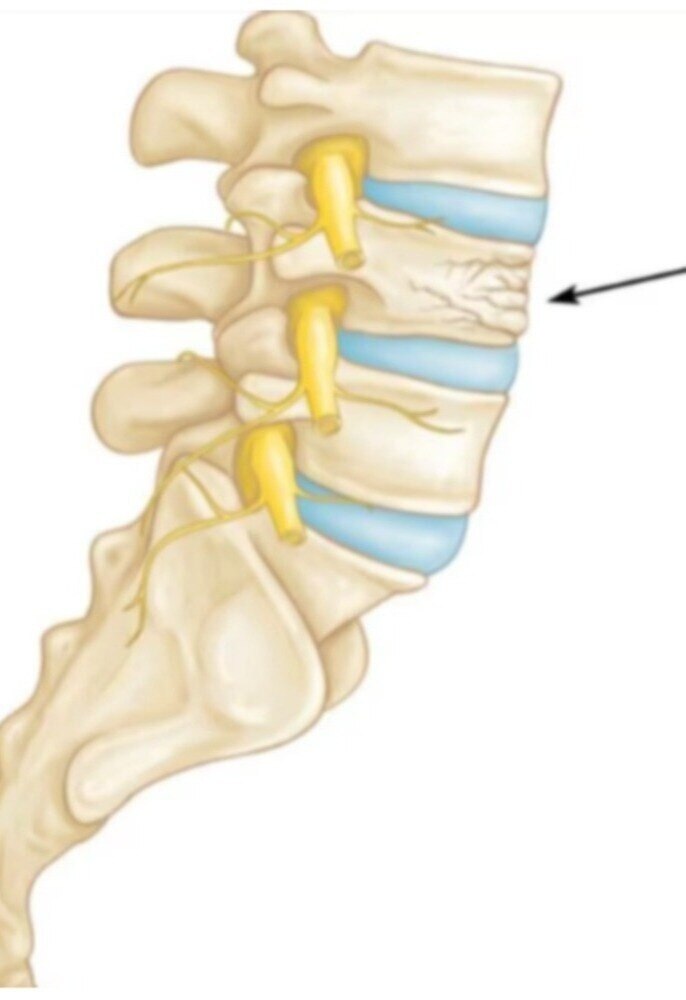
A vertebral compression fracture occurs when weakened bone collapses, sometimes after a fall, lifting, coughing, or no obvious injury. Focal midline back pain that worsens when standing or walking, with new height loss or a stooped posture, raises suspicion more than diffuse muscle soreness.
An osteoporotic fracture is not automatically a surgical emergency; stable fractures without nerve symptoms often begin with elderly spine fracture treatment such as pain control and safe mobilisation.
Standing X-rays show vertebral height loss, alignment and worsening collapse. MRI with fluid-sensitive sequences shows marrow oedema from a recent fracture, and checks the spinal cord, nerve roots, infection and cancer. CT shows posterior-wall damage, bone fragments pushed backward, and fracture morphology needed for surgical planning.
| Condition | Clues that distinguish it | Imaging or examination |
|---|---|---|
| Osteoporotic fracture | Focal pain after minimal force or no injury; pain on standing | MRI oedema; X-ray height loss |
| Muscle strain | Diffuse tenderness after exertion; no vertebral collapse | Normal vertebral imaging |
| Disc prolapse | Leg-dominant pain, tingling or weakness; back pain may be less focal | MRI disc and nerve-root compression |
| Cancer | Night pain, weight loss, known malignancy, unusual collapse | MRI marrow pattern; CT or biopsy when required |
| Infection | Fever, chills, constant pain, raised inflammatory markers | MRI disc, bone and soft-tissue changes |
| Traumatic fracture | Clear high-force injury, deformity or instability | CT defines fracture lines and posterior-wall involvement |
Seek immediate assessment for new leg weakness, numbness, loss of bladder or bowel control, inability to stand, fever, severe unrelenting pain, or suspected instability after trauma. These signs require urgent evaluation for spinal-cord compression, infection or an unstable fracture.
When Bracing and Early Movement Are Safer Than Surgery
Non-operative elderly spine fracture treatment is appropriate when the patient has no new neurological deficit, major deformity, or mechanical instability, and pain is manageable with medication. Age alone should not decide; frailty, cognition, walking ability, anticoagulants, heart or kidney disease, breathing reserve, nutrition, and personal goals must be weighed against spine fracture surgery options.
A safe recovery plan should include:
- Prescribed analgesia that allows standing and walking, with constipation and drowsiness monitored.
- Early mobilisation with physiotherapy; avoid prolonged bed rest, which causes deconditioning, blood clots, pressure injuries, and chest infection.
- A time-limited thoracolumbar brace when movement is painful or the treating clinician considers support useful; reassess rather than wearing it indefinitely.
- A review plan with repeat clinical assessment if pain remains severe, posture worsens, or walking declines.
- Osteoporosis assessment, including calcium and vitamin D intake where appropriate, tests for secondary causes, fall-risk reduction, and an evidence-based anti-osteoporosis medicine.
- Medication review before mobilisation, especially for anticoagulants, sedatives, and drugs that increase falls.
Return urgently for new leg weakness, numbness, bladder or bowel changes, fever, inability to stand, or escalating unrelenting pain. Failure to improve despite a structured trial of care warrants repeat imaging and discussion of augmentation or stabilisation, not automatic surgery. Shared decision-making and medical optimisation remain essential.
Vertebroplasty and Balloon Kyphoplasty: Who Actually Benefits?
Vertebral augmentation deserves consideration only when severe, localised fracture pain persists despite appropriate analgesia, bracing or guided movement, and MRI confirms a recent painful fracture. Do not treat every compression fracture visible on an X-ray: old, healing, or painless collapse usually gains little from cement.
| Option | Potential benefit | Limits and complications |
|---|---|---|
| Vertebroplasty | Cement stabilises the painful vertebral body; selected patients with severe acute pain may improve quickly. | Sham-controlled trials found no clinically important advantage for many uncomplicated fractures. Cement can leak into the spinal canal or veins, causing nerve injury or embolic complications. |
| Balloon kyphoplasty | Can reduce pain and improve function in selected acute fractures; balloon inflation may restore some vertebral height. | Height restoration does not prove surgery is necessary. Risks include cement leakage, embolism, infection, bleeding, anaesthetic complications, and fracture at an adjacent level. |
| No augmentation | Avoids an invasive procedure while pain settles with medication, a brace, activity modification, and rehabilitation. | Pain can remain disabling, and delayed collapse or deformity requires reassessment rather than indefinite waiting. |
Ask an osteoporotic spine fracture surgeon why augmentation fits your MRI findings, pain pattern, fracture stability, and medical risks. Compare the expected pain improvement with the possibility that pain comes from another level or condition, and ask what happens if cement treatment fails.
Whichever spine fracture surgery options you choose, arrange bone-health treatment separately: osteoporosis assessment, investigation for secondary causes, appropriate calcium and vitamin D intake, fall-risk reduction, and an evidence-based medication plan. A treated fracture without fracture prevention leaves the next vertebra exposed.
When Collapse, Deformity, or Nerve Compression Requires Stabilisation
Cement augmentation alone is a poor fit when the vertebra keeps collapsing, the spine has become sharply kyphotic, or the fracture is unstable. Posterior-wall or posterior-element disruption, bone pushed into the canal, spinal-cord or nerve-root compression, and new weakness or numbness can require decompression, fixation, or both.
| Option | What it addresses | When it applies |
|---|---|---|
| Decompression | Removes bone or fracture material pressing on neural tissue | Canal compromise with cord or nerve-root deficit, or persistent compression that matches symptoms |
| Pedicle-screw fixation | Holds the fractured segment while it heals | Demonstrable instability, progressive collapse, painful movement, or failure of cement augmentation |
| Longer fusion | Distributes load across more vertebrae | Severe osteoporosis, marked deformity, multiple fractured levels, or poor purchase for a short construct |
| Combined reconstruction | Relieves compression and restores stability | Neural compression alongside kyphosis, posterior-element damage, or mechanical instability |
Decompression alone can worsen failure when removing stabilising structures from an already unstable spine. Conversely, extensive fixation exposes an older or frail patient to blood loss, wound problems, screw loosening, cardiopulmonary stress, and revision surgery. Severe osteoporosis may require more fixation points, cement-augmented screws, hooks, or a longer construct rather than standard short-segment screws.
There is no verified universal “best neurosurgeon spine fracture” ranking. Compare the proposed spine fracture surgery options, including risks and non-operative alternatives, rather than choosing an advert promising “osteoporotic spine fracture surgery for best neurosurgeon.” Ask how bone quality, deformity, CT findings, and neurological examination change the plan.
How to Compare an Osteoporotic Spine Fracture Surgeon
Verify the surgeon’s specialist registration, hospital privileges, and specific experience with osteoporotic trauma, deformity, neural compression, and revision surgery. Confirm that the hospital has MRI, CT, anaesthesia, and intensive-care backup. Ask for the proposed operation, non-surgical alternative, likely complications, and the policy if screws loosen or the fracture needs revision.
- Ask how CT and MRI findings change the plan, rather than accepting a procedure based on an X-ray alone.
- Ask how severe osteoporosis will alter fixation: longer constructs, more fixation points, cement-augmented screws, hooks, or another load-sharing method.
- Request a bone-health plan covering osteoporosis assessment, secondary causes, calcium and vitamin D where appropriate, fall prevention, and medication to reduce future fractures.
- Discuss frailty, memory, walking ability, nutrition, anticoagulants, kidney or heart disease, and breathing reserve. Age alone should not decide surgery, but these factors can make mobilisation, augmentation, limited fixation, or major reconstruction safer or riskier.
- Seek a second opinion before an irreversible operation when the fracture is stable, the recommendation is vertebroplasty alone, or the proposed surgery is extensive. Compare imaging, goals, and complication estimates—not just titles or online claims.
| Option | What to verify | Decision implication |
|---|---|---|
| Analgesia and mobilisation | Stability and neurological status | Often safer when surgery adds more risk |
| Augmentation | Acute pain, fracture pattern, posterior wall | Not automatically beneficial for every fracture |
| Fixation or reconstruction | Deformity, compression, bone quality | Requires a plan to prevent loosening and failure |
A search for best neurosurgeon spine fracture cannot establish quality by itself. For osteoporotic spine fracture surgery for best neurosurgeon, use documented qualifications and a risk-based plan; Dr Dilip Kiyawat is one specialist a patient may include in that comparison.
Related items
 | Spine Surgery Dr. Dilip S. Kiyawat has wide experience in treating spinal disorders. View service → |
Brain Surgeon Here are numerous types of brain surgery. The type used is based on the area of the brain and the condition being treated. View product → |
Frequently asked questions
How is an osteoporotic vertebral fracture confirmed?
A clinician uses your symptoms and examination with spine X-rays. MRI identifies bone-marrow swelling from a recent fracture and checks for nerve or spinal-cord compression. CT shows fracture lines, posterior-wall damage, and the amount of collapse.
When is an osteoporotic spine fracture urgent?
Seek urgent assessment for new leg weakness, numbness in the saddle area, difficulty walking, loss of bladder or bowel control, fever, severe unrelenting pain, or a known fracture after major trauma.
When are bracing and early movement safer than surgery?
They suit stable fractures without neurological deficits, major deformity, or spinal-canal compromise. Your plan may include a time-limited brace, pain control, osteoporosis treatment, walking, and physiotherapy.
Who benefits from vertebroplasty or balloon kyphoplasty?
These procedures are considered when severe, localised fracture pain persists despite appropriate non-operative care and imaging confirms a painful recent fracture. Kyphoplasty uses a balloon to create a cavity and may restore some vertebral height before cement injection.
When does an osteoporotic spine fracture require stabilisation?
Stabilisation is considered for progressive collapse, marked deformity, instability, posterior-wall injury, spinal-canal narrowing, nerve compression, or pain that prevents mobilisation. The surgeon must account for poor bone quality when selecting screws, cement augmentation, and the number of levels treated.