
A vertebral fracture can follow a minor movement, a cough, or no memorable accident when bone density is low, yet it is easily mistaken for ordinary back pain. You will learn how to recognise danger signs, understand the tests and treatment choices, and assess whether a specialist is suitable for recovery in an older adult.
Key takeaways
- Seek urgent care for leg weakness, numbness, bladder changes, or loss of bowel control.
- Ask whether MRI, CT, or X-rays confirm the vertebral fracture and its age.
- Use prescribed movement, pain relief, and osteoporosis treatment instead of prolonged bed rest.
- Discuss vertebral augmentation or surgery when pain persists or nerve compression develops.
What an osteoporotic spine fracture feels like and when it is urgent
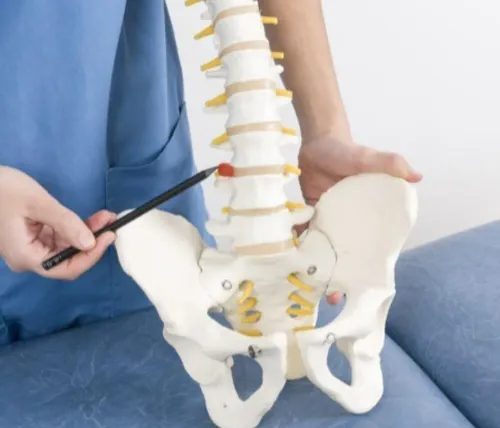
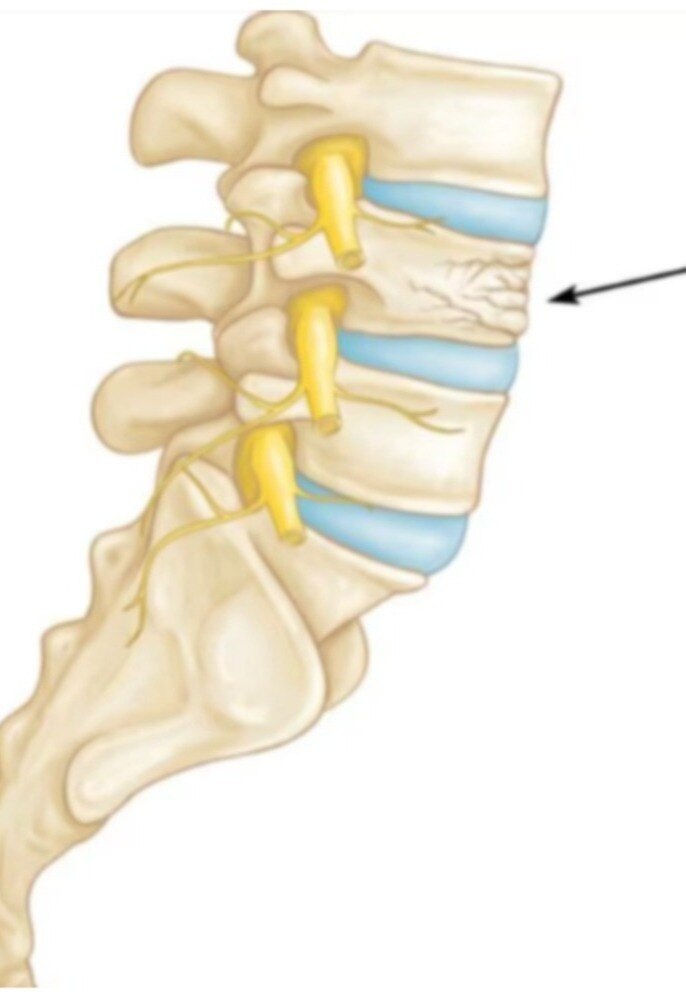
A possible vertebral fracture often causes sudden, deep pain in the middle of the back or lower back, especially after a minor fall, lifting movement, cough, or even turning in bed. With low bone density, the vertebral body can compress into a wedge shape without a memorable injury.
Pain usually worsens when standing, walking, coughing, or changing position; tenderness may sit directly over one vertebra. Do not dismiss this as ordinary age-related backache.
| Pattern | More suggestive of |
|---|---|
| Localised midline pain after movement, with pain on standing or sitting upright | Vertebral compression fracture |
| Pain linked to muscle use, with less focal spinal tenderness and steady improvement | Muscle strain |
| Back pain shooting below the knee with tingling or weakness | Lumbar disc prolapse or nerve compression |
| Leg heaviness or pain brought on by walking and relieved by sitting or bending forward | Spinal stenosis |
| Constant progressive pain, night pain, weight loss, or a history of cancer | Infection or metastatic disease |
Seek immediate assessment rather than waiting for routine osteoporotic spine fracture care in Pune if you have:
- New leg weakness, increasing difficulty walking, or inability to stand
- Numbness around the saddle area, or loss of bladder or bowel control
- Fever with severe back pain
- Severe unrelenting pain, particularly at night
- Pain after a significant fall or other major injury
Even without these warning signs, arrange prompt evaluation after new focal back pain. A fragility fracture needs assessment for osteoporosis and other causes.
How doctors distinguish a vertebral fracture from other causes of back pain
A new, focal back pain after a minor movement deserves imaging, even without a remembered fall. Doctors distinguish a vertebral fracture from muscle strain, disc disease, stenosis, infection, and cancer by combining your history, examination, and images rather than relying on pain intensity alone.
The pathway usually answers four questions:
- Plain X-rays show vertebral height loss, a wedge shape, spinal alignment, and whether more than one level is affected. They suggest a fracture but often cannot establish its age or cause.
- MRI shows bone-marrow oedema, which supports a recent or still-active fracture. It also reveals spinal-cord or nerve compression, disc disease, infection, and tumour involvement.
- CT shows the bony anatomy in greater detail, including posterior-wall damage, retropulsed fragments, canal narrowing, and features that determine mechanical stability.
- A neurological examination checks leg power, sensation, reflexes, walking, and bladder or bowel function. Abnormal findings raise the urgency of MRI and specialist assessment.
A fracture without marrow oedema is often older, but doctors match that finding with symptom timing and earlier scans. A low-energy fracture points toward osteoporosis; blood tests such as calcium, alkaline phosphatase, kidney function, vitamin D, and protein studies help investigate secondary osteoporosis or malignancy when indicated.
An elderly spine fracture specialist in Pune should explain which level is painful, whether the fracture is stable, and whether nerves are threatened. Ask how the imaging excludes cancer or infection before accepting “age-related backache” as the diagnosis.
How to recover safely without defaulting to prolonged bed rest
A stable vertebral compression fracture with no leg weakness, sensory loss, or spinal-cord compression is often treated without surgery. This plan works only when imaging supports stability and pain remains manageable enough for safe movement; worsening pain or new neurological symptoms requires reassessment.
1. Use the prescribed pain relief on schedule during the acute phase, rather than waiting until pain prevents movement. Review medicines that cause drowsiness, constipation, kidney problems, or falls.
2. Mobilise early in short, frequent periods. Walk with appropriate support, change position regularly, and avoid prolonged bed rest, which increases weakness, constipation, pressure injuries, blood clots, and loss of independence.
3. Ask a physiotherapist to teach log-rolling, transfers, walking progression, breathing exercises, and gentle trunk and leg strengthening. Stop an exercise that causes sharp pain, new numbness, or weakness.
4. Keep your spine neutral during daily tasks: bend at the hips and knees, hold loads close, avoid repeated forward flexion and twisting, and use raised seating or grab aids when needed. A brace may help selected patients, but it is not automatic and should be fitted and reviewed.
5. Treat the bone, not only the pain. Arrange bone-mineral-density testing and review calcium, vitamin D, medicines, vision, footwear, and fall hazards; discuss anti-resorptive or anabolic treatment when indicated.
A spine fracture recovery doctor in Pune should coordinate imaging, rehabilitation, fall prevention, and osteoporosis care. Recovery is not complete when the pain eases; follow-up should check mobility, posture, medication effects, and protection against the next fracture.
When vertebral augmentation or surgery becomes part of the decision
Vertebroplasty or balloon kyphoplasty should be considered only when severe fracture pain persists despite appropriate non-operative care, imaging identifies the painful fracture, and infection, cancer, nerve compression, and other pain sources have been excluded. The procedure is not automatic for every compression fracture.
1. Vertebroplasty injects bone cement into the collapsed vertebra. Balloon kyphoplasty first creates a cavity with an inflatable balloon, then fills it with cement. Both may reduce fracture pain and improve movement; kyphoplasty may also improve vertebral height, but neither guarantees recovery.
2. Discuss cement leakage, which can irritate nerves or enter blood vessels, along with infection, bleeding, anaesthetic complications, and fracture of an adjacent vertebra. Pain from spinal stenosis, facet joints, muscle weakness, or another fractured level will not disappear simply because one vertebra is treated.
3. Decompression or instrumented fixation becomes more relevant when the fracture causes spinal-cord or nerve compression, major instability, progressive deformity, or pain that remains disabling despite other treatment. These operations carry greater recovery demands and medical risks than augmentation.
4. Ask how the scan proves that the target vertebra causes your pain, what non-operative treatment has been tried, and what outcome is realistic. In osteoporotic spine fracture care in Pune, also confirm a plan for bone-density assessment, fall prevention, and osteoporosis medication; cement treats the fracture, not the fragile bone.
How to choose and work with a specialist for recovery in Pune
A neurosurgeon above 40 years experience may bring valuable judgment, but experience alone does not prove better outcomes or justify surgery.
For osteoporotic spine fracture recovery in Pune, verify the clinician’s registration with the National Medical Commission or Maharashtra Medical Council, named specialty training, current hospital privileges, and routine experience with spinal trauma, neural compression, osteoporosis, and non-operative recovery.
Ask how the plan will coordinate imaging, physiotherapy, pain control, and osteoporosis treatment. “Elderly spine fracture specialist in Pune” is a search description, not a recognised credential; care may also require a geriatrician, endocrinologist, osteoporosis-capable physician, or fracture liaison service.
| Question | What to verify | Why it matters |
|---|---|---|
| Experience claim | Dates and scope of spine practice, not only “40 years” | Long service does not show experience with fragility fractures |
| Clinical plan | Examination, MRI or other imaging when indicated, and clear surgical criteria | Prevents treatment based on an X-ray or pain score alone |
| Hospital access | Current privileges and who handles emergencies | Weakness, bladder changes, or worsening deformity need rapid review |
| Bone care | BMD testing, medication and fall review, and calcium or vitamin D assessment where indicated | A healed fracture does not remove the next-fracture risk |
After acute pain improves, schedule review of mobility, posture, pain, deformity, and neurological findings. New pain, reduced walking, increasing stoop, leg weakness, numbness, or bladder or bowel changes requires prompt reassessment and possible repeat imaging.
Long-term follow-up should track osteoporosis treatment adherence and response, rehabilitation progress, falls, and new fractures. Dr Dilip Kiyawat is one clinician you can ask these specific questions of when comparing a spine fracture recovery doctor in Pune.
Related service
 | Spine Surgery Dr. Dilip S. Kiyawat has wide experience in treating spinal disorders. View service → |
Frequently asked questions
What does an osteoporotic spine fracture feel like, and when is it urgent?
It often causes sudden, deep mid-back or lower-back pain after a minor movement, fall, cough, or turn in bed. Seek urgent medical care for new leg weakness, numbness, difficulty walking, loss of bladder or bowel control, or severe unrelenting pain.
How do doctors distinguish a vertebral fracture from other causes of back pain?
Doctors use your history and examination alongside imaging. X-rays can show a collapsed or wedge-shaped vertebra, while CT defines the bone injury and MRI helps identify a recent fracture, spinal-cord or nerve compression, infection, and other causes.
How can you recover safely without prolonged bed rest?
Follow a clinician-directed plan using short periods of rest, gradual walking, safe transfers, prescribed pain relief, and exercises that protect the spine. Treating osteoporosis and reducing fall hazards are also part of recovery.
When is vertebral augmentation or surgery considered?
The decision depends on pain severity, fracture stability, imaging findings, nerve or spinal-cord compression, and response to non-surgical treatment. Vertebral augmentation or surgery is considered when selected patients have persistent disabling pain, instability, or neurological symptoms.
How do you choose a specialist for osteoporotic spine fracture recovery in Pune?
Choose a specialist who reviews your imaging, explains non-surgical and surgical options, checks for neurological problems, and coordinates osteoporosis and rehabilitation care. Ask about experience treating older adults and the follow-up plan after discharge.