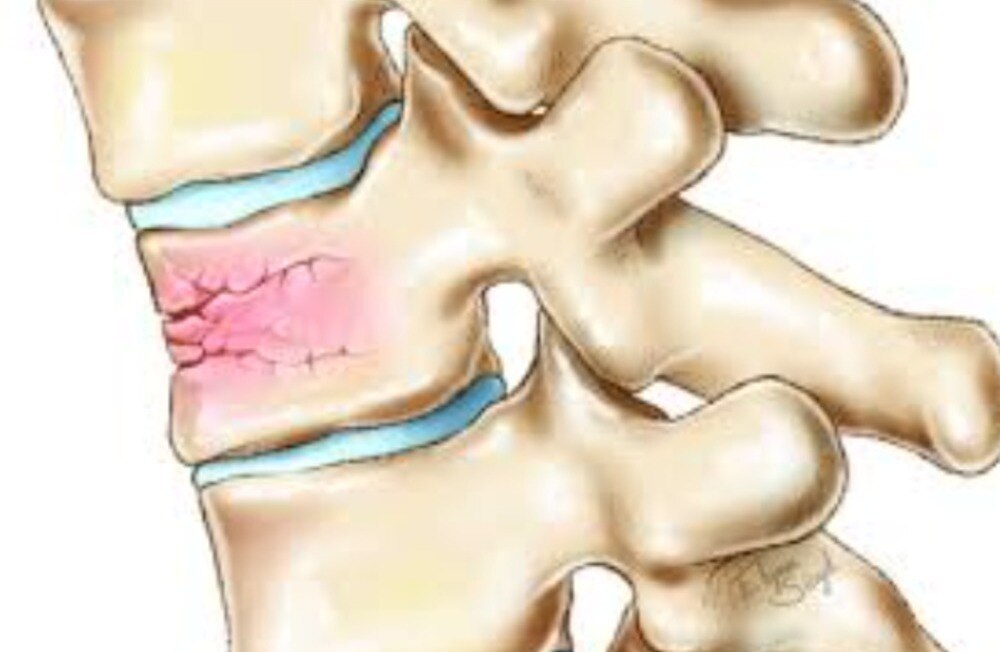
A spinal fracture in an older adult can follow a minor fall, a twist, or no memorable accident at all. The right specialist must distinguish an emergency from a stable compression fracture, interpret the right imaging, account for osteoporosis and frailty, and explain when surgery will—or will not—improve mobility and independence.
Key takeaways
- Seek emergency care for new weakness, numbness, bladder loss or severe worsening pain.
- MRI shows spinal-cord injury and helps distinguish a recent fracture from an old one.
- Osteoporosis increases collapse, delayed healing and the risk of another fracture.
- Ask whether stabilisation, cement augmentation or non-surgical care fits the fracture pattern.
How older adults sustain spinal fractures—and when the injury is an emergency
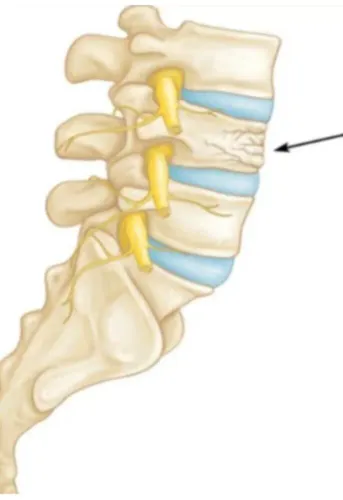
A minor fall can fracture an older adult’s spine because osteoporosis weakens the vertebral body. Landing on the feet, twisting while getting out of a chair, or lifting a light object can trigger a compression fracture without a major accident. A normal X-ray does not reliably exclude injury.
The risk is higher with ankylosing spondylitis or diffuse idiopathic skeletal hyperostosis (DISH). These conditions create a rigid, brittle spinal column, so a low-energy injury can produce an unstable three-column fracture. CT is the key initial scan for suspected trauma; whole-spine CT is appropriate when the spine is rigid or the injury level is uncertain.
MRI is added for weakness, numbness, suspected cord or nerve-root compression, ligament damage, or persistent pain unexplained by CT.
| Situation | What it may indicate | Action |
|---|---|---|
| Pain after a minor fall, no neurological symptoms | Stable compression fracture or hidden fracture | Same-day medical assessment and CT if suspicion remains |
| New weakness, numbness, hand clumsiness, worsening walking, or inability to stand | Spinal-cord or nerve injury | Emergency department immediately; keep the spine still |
| Loss of bladder or bowel control, severe escalating pain, or altered alertness after a fall | Possible cord compression or serious associated injury | Call emergency services; do not attempt to walk |
The best spine trauma and fracture correction specialist for older adults should arrange urgent imaging rather than offer a routine second opinion when these warning signs appear.
The tests that reveal fracture stability, spinal-cord injury and fracture age
CT is the key test for suspected spinal trauma because it shows fracture lines, posterior-element injury, canal narrowing and loss of vertebral height. A normal X-ray does not reliably exclude a fracture in an older adult, particularly after a fall or in osteoporosis.
- Examine strength, sensation, reflexes, hand function, gait, and bowel or bladder control. New weakness, numbness, poor coordination or urinary retention requires emergency assessment.
- Use MRI when CT does not explain persistent severe pain, or when cord, nerve-root, disc or ligament injury is suspected. MRI also helps estimate fracture age: bone-marrow oedema supports a recent or healing fracture; its absence favours an older deformity, although timing is not exact.
- Scan the whole spine with CT after minor trauma in someone with ankylosing spondylitis or diffuse idiopathic skeletal hyperostosis. A rigid spine can break through all three columns, and a single-region X-ray can miss the injury.
- Arrange bone-density assessment and blood tests after a vertebral fracture, including calcium, vitamin D, renal function and tests for secondary bone loss.
| Test | What it shows | How it helps distinguish the injury |
|---|---|---|
| Plain X-ray | Height loss, wedging or curvature | Finds obvious collapse but can miss a new fracture and cannot reliably show instability |
| CT | Fracture lines, displacement, posterior elements and canal compromise | Defines mechanical stability and surgical anatomy |
| MRI | Marrow oedema, cord, nerves, discs and ligaments | Supports a recent fracture and reveals neurological or soft-tissue injury |
| Neurological examination | Strength, sensation, reflexes and bladder function | Identifies spinal-cord or nerve injury requiring urgent escalation |
For spine trauma care in Pimpri-Chinchwad, confirm where CT and MRI are performed, who reviews scans urgently, and whether the hospital provides immobilisation, decompression, anaesthesia and rehabilitation.
How osteoporosis changes treatment, healing and the risk of another fracture
Osteoporosis weakens the vertebral body, so a small fall or twist can cause collapse without a dramatic accident. The damaged bone may continue to settle, increasing kyphosis, pain and load on nearby vertebrae. Poor bone quality also reduces screw grip, making surgical fixation and correction more demanding.
An osteoporotic fracture correction specialist should assess mechanical stability, spinal alignment, pain progression, neurological findings and your ability to walk safely before recommending surgery. A stable fracture without progressive weakness does not automatically need an operation.
Non-operative recovery should protect movement rather than impose prolonged bed rest:
- Use prescribed analgesia so you can breathe deeply, stand and walk.
- Mobilise early with a walker, supervision and fall precautions.
- Wear a brace only when its fit, duration and purpose have been assessed; a brace can worsen skin injury, breathing difficulty or weakness in a frail adult.
- Start selected physiotherapy focused on transfers, posture, leg strength and balance.
- Ask for an osteoporosis plan, including bone-health assessment and medication when indicated.
- Arrange review to check pain, height loss, alignment and new neurological symptoms.
Bed rest can cause muscle loss, pressure injuries, blood clots, chest infection and permanent loss of independence. Seek urgent reassessment for escalating pain, new weakness or numbness, inability to stand, or bladder or bowel changes. Preventing another fall and treating osteoporosis are part of fracture care, not optional extras.
When spine fracture surgery is considered for an older adult
Surgery is considered when a fracture threatens the spinal cord or nerves, is mechanically unstable, continues to deform, or causes pain that prevents safe mobilisation despite appropriate non-operative care. Spine fracture surgery for elderly patients is not decided by age or an X-ray appearance alone.
A neurologically intact adult with a stable thoracolumbar fracture may recover without surgery if pain is controlled and the person can stand and walk safely with monitoring. A brace is not suitable for every fracture or frail patient.
Poor bone quality affects screw purchase, healing and the risk of another fracture, so the plan may include osteoporosis treatment and fall prevention.
Before recommending an operation, ask whether the patient can tolerate anaesthesia and rehabilitation. The decision should account for:
- New weakness, numbness, loss of coordination, or spinal-cord or nerve-root compression on MRI
- Fracture displacement, ligament injury, progressive deformity, or instability on CT and follow-up imaging
- Bone density, fracture pattern, and whether fixation is likely to hold in osteoporotic bone
- Frailty, cognition, heart and lung reserve, kidney disease, anticoagulants, and other surgical risks
- Pre-injury walking ability, pain-related immobility, available family support, and the patient’s goals
An odontoid fracture requires particular caution: non-union must be weighed against swallowing difficulty, aspiration, skin injury from a collar, halo complications and operative risk. The consultation should document alternatives, expected mobility, brace instructions, warning symptoms, follow-up timing and rehabilitation capacity—not merely say “surgery recommended.”
How to choose a specialist and hospital pathway in Pimpri-Chinchwad
Choose the best neurosurgeon for spine trauma by relevant fracture experience and the hospital’s emergency pathway, not by the title “neurosurgeon” or general reputation. Ask whether the surgeon regularly treats cervical and thoracolumbar fractures, including injuries in osteoporotic or ankylosed spines, and explains non-operative care as clearly as surgery.
Ask these questions before choosing:
- Where will a suspected fracture receive immediate CT and, when needed, MRI?
- Can the surgeon review scans urgently and arrange immobilisation or decompression?
- Does the hospital have 24-hour anaesthesia, intensive care, blood-bank support and difficult-airway expertise?
- Who will coordinate rehabilitation, geriatric or medical co-management, osteoporosis treatment and fall prevention?
- Will you receive a written diagnosis stating the fracture level, stability, neurological findings, treatment alternatives, brace or collar instructions, red flags and follow-up date?
For spine trauma care in Pimpri-Chinchwad, verify the pathway rather than relying on the consultation location.
| Check | Adequate pathway | Warning sign |
|---|---|---|
| Imaging | 24-hour CT, MRI access and rapid scan review | Routine appointment only |
| Neurological deterioration | ICU, anaesthesia and decompression capability | Transfer arranged after deterioration |
| Recovery | Local rehabilitation and osteoporosis follow-up | Surgery offered without aftercare plan |
If you consult Dr Dilip Kiyawat, use this checklist to confirm that the proposed plan covers both urgent safety and long-term mobility. New weakness, numbness, hand-function loss, gait decline or bladder or bowel changes require emergency assessment, not a routine second opinion.
Related items
 | Spine Surgery Dr. Dilip S. Kiyawat has wide experience in treating spinal disorders. View service → |
 | Spine Surgery Prolapsed Lumbar Intervertebral Disc- Medical management The prolapsed lumbar intervertebral disc also referred to as slipped disc, sciatica, or just... View product → |
Frequently asked questions
When is an older adult’s spinal fracture an emergency?
Treat new leg weakness, numbness, loss of bladder or bowel control, inability to stand, or rapidly worsening severe pain as emergency warning signs.
Which tests show whether a spinal fracture is stable?
X-rays show alignment and vertebral collapse. CT defines the bony fracture pattern, while MRI reveals spinal-cord or nerve injury, ligament damage and whether the fracture is recent.
How does osteoporosis affect spinal fracture treatment?
Osteoporosis weakens vertebrae, increases collapse and can delay healing. Treatment also needs bone-health assessment to reduce the risk of another fracture.
When is spine fracture surgery considered for an older adult?
A specialist may consider surgery for spinal-cord or nerve compression, unstable alignment, progressive collapse, severe persistent pain or failure of appropriate non-surgical treatment.
How should you choose spine trauma care in Pimpri-Chinchwad?
Choose a pathway with specialist examination, access to MRI and CT, osteoporosis assessment, timely emergency review and a hospital team able to provide surgery when required.
Related items
 | Treatment of Head injury ₹1200 Management of head injuries 1. Extensive scalp laceration- . The bleeding is controlled by suturing the scalp. . View service → |
Brain Surgeon Here are numerous types of brain surgery. The type used is based on the area of the brain and the condition being treated. View product → |
 | TUMOR & CANCERS Brain Tumor & Cancer An Cerebral aneurysm or intracranial aneurysm is when the internal walls of the artery through which the blood flows in the brain becomes thin and... |
| Brain Surgery ₹1200 Brain tumours are abnormal growths of cells within the brain or the surrounding structures. View service → |